A Woman of Valor
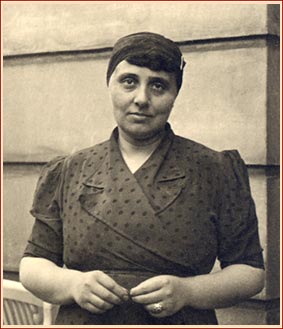
Even though she had her hands full with her nine children, Mrs. Lotte studied typewriting at the commercial school of Moses Deutschlaender (see ad) to assist her husband, the Rabbi, with his huge correspondence and literary work. In the Hamburg directories of the 1920s Moses Deutschlaender is listed as the commercial school’s principal, Grindel Avenue 53.
Aunt Recha: How did she manage it all?
Lotte did not only take pictures, type and write poems.
If she was prevented from attending an official ceremony on account of having given birth, she apologized: Lotte Carlebach – officially prevented.
In the Rabbi’s household she attended to her nine children and their countless playmates, who often stayed for lunch or dinner, as well as to the many distressed petitioners in need during these times of hardship. In addition she was in charge of organizing the Rabbi’s consultation hours, hosted permanent guests and last but not least – provided so-called “services in between”.
More Young Children in the NS Time
Straw blond boys in uniform were being drilled for long hours in the Altona Palmaille street. Hence it frequently happened that one of the frailer little ones just collapsed and fainted. Consequently they brought these children of the Hitler Youth to our rabbi’s home – Palmaille 57 – and laid them on one of the children’s beds. Rebbetzin Lotte gave them some tea and put moist towels on their foreheads, sometimes caressed their pale faces, saying:
Nu Nebbich, pitiable, they are just little children.
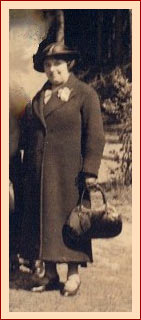
Aunt Recha
Refugee Children
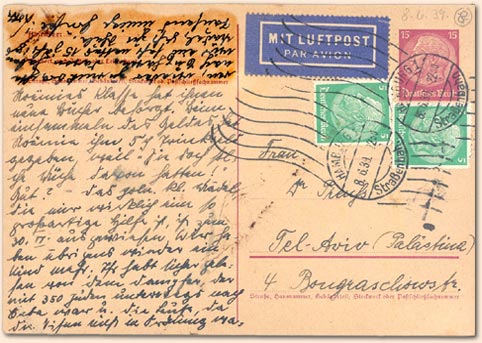
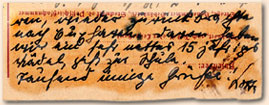
“… Once again, we’ve got another child … her name is Ruth… from the steamer to Cuba that came back, she goes to school…”
Postcard from Lotte, 8.7.1939
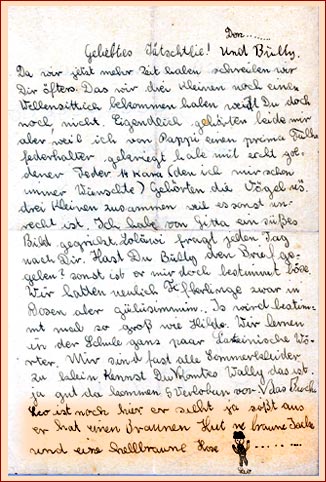
“… Leo is also still here, he looks cute, he wears a brown hat, a brown jacket and light brown pants…”
Letter with drawings from Noemi
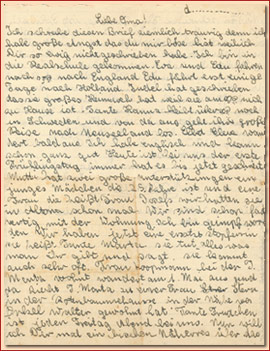
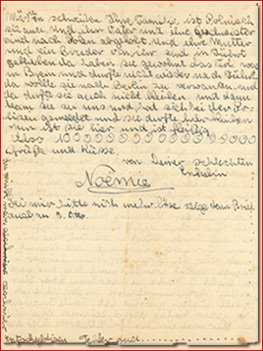
“… Now I’ll tell you some more about the girl Eva. Her family is polish, she is too. And her father and her siblings had been taken to Poland. And her mother and one of her brothers stayed in Fuerth. She was in Bremen and was not allowed to go back to Fuerth. So she wanted to go to Berlin… and there she was not allowed to stay either. And then she came to us and registered at the police, and she was permitted to stay with us…”
Letter from Noemi, April 1939
The Collection of One-Pound Food Portions (‘Pfundsammlung’)
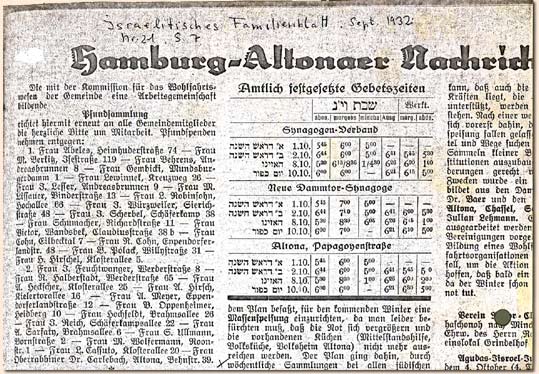
The Carlebach’s basement kitchen served as collection point for the so-called “collection of one-pound food portions” for the support of needy families. Every housewife donated each month one-pound food portions of her own choice.
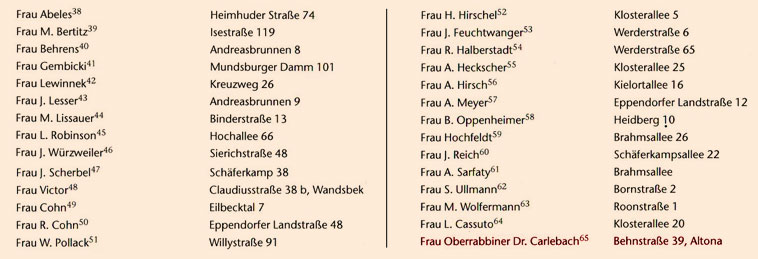
There is a need for peas, beans, lentils… oatmeal, tea, cacao… noodles, butter and vegetable fat, the latter three items only kosher… and it’s only natural that Rebbetzin Lotte Carlebach’s name, too, was listed among the names and addresses of collection and distribution points.
The Matzah Factory
Letter from Rebbetzin Carlebach to her children in London, 7.4.1939:
“… Food supply for Passover is extremely difficult. Thank God Katz’ Matzah factory still exists, so at least we’ll have Matzot, but the quantities are, of course, much smaller than usual.”
“… What Mr. Katz accomplished at his Matzah factory is nothing short of incredible; I think they have been working incessantly day and night during the last 6 weeks before Pessach…”
“… I myself was on the phone almost the whole day: this one and that one have not gotten any Matzot – there they started laughing already whenever I called them to say that this community and that one don’t have their Matzot yet!”
And perhaps not only Mr. Katz performed the incredible…
Consolation Meals
Depending on the situation, Lotte Carlebach visited the sick or sent home-cooked meals, of which especially strawberries with lemon cream worked as a remedy. Children with sick mothers or from afflicted families of the Jewish community in times of ongoing crisis, stayed in the Carlebach house as overnight guests; and if there was no other possibility, she sent a flower bouquet with hastily written greetings and wished for a quick recovery.

Providing for Poor Orphaned Brides
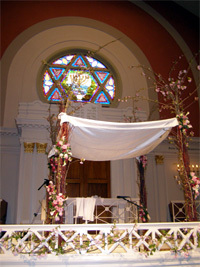
The Chuppa, the wedding ceremony for poor brides took place at the Carlebach’s home, followed by Lotte Carlebach’s prepared food and service. Beforehand, though, Lotte held preparatory talks with the bride and discreetly helped her procure the dowry…
During the years of terror it also occurred that a young couple “ran” headlong to the Carlebach’s home in order to release someone who had been arrested or enable a “double departure” on a “single certificate”. However, it seemed that Mrs. Lotte was always ready for all situations – possible and impossible alike.
No one ever heard her complaining, although looking at it objectively, it was far from easy. Even when the “Sabbath food” she had just finished cooking was given to a needy family at the last minute, she always managed “to produce something else out of thin air”.
Aunt Recha:
We – the initially skeptical Carlebach sisters-in-law – kept on wracking our brains: How did she manage it all! Nine children, the ringing of doorbell and phone, conversations with petitioners and her hospitality on top of that! How in the world did she get it all done! And handling it all with great calm…
Rebbetzin Weiss’ opinion:
“Lotte Carlebach had a different scale of values than most of us have. What was truly important to her? Converting human values into concrete deeds – for this she found time…”
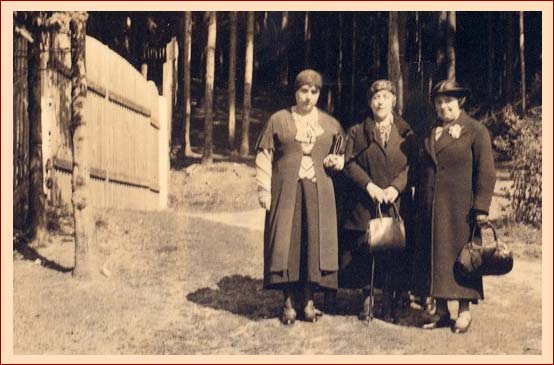
Lotte with two sisters-in-law: Bella Rosenack (on the left) and Recha Carlebach (on the right)

