

A particular theme of the trip, which stood out to me upon first viewing the photographs were the many trips my family took to the Synagogues in the towns and cities that they visited. They visited a Synagogue wherever they went. I could not help but wonder how many, if any had survived the Nazis.
My great uncle took tourist snaps of soldiers in Nazi uniform and street scenes with the swastika flag prevalent throughout.
Also there were pictures of people whom they had met during the trip, including the Rabbi Carlebach and his family at their Synagogue in Hamburg.
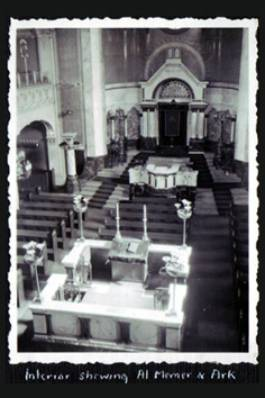
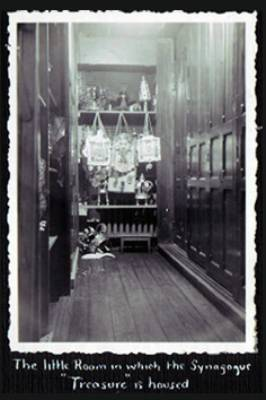
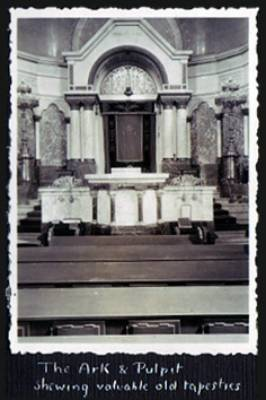
My family visited the Synagogue of Hamburg on 31st August and were later to enjoy hospitality at the home of Rabbi Carlebach, his wife Lotte and nine children. In addition to photographs of the interior of the synagogue, including the “treasures”, were pictures taken in the Carlebach’s garden, family pictures which inspired me to try to trace the participants. Although Germany was under Nazi rule, the pictures offered no clue to the tourists of the horrifying events that would materialise just a year later.
Photographs from the interior of Rabbi Carlebach’s Synagogue, Bornplatz
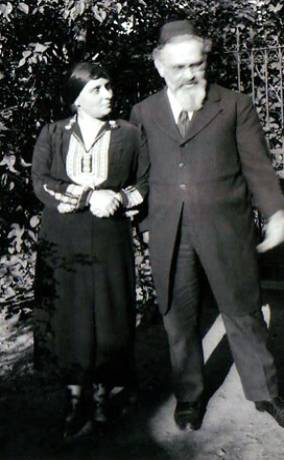
The mood in the garden that August day appears cheerful and the photographs show a happy family scene. I am not sure whether this would have been the case at the time or indeed whether my family had any inclination as to the seriousness of the situation unfolding in Germany. Jewish Family life in London in the 1930’s was comfortable and Jews in Great Britain were not particularly threatened or harassed. I do not know whether the visit was just a coincidental meeting on a family holiday or if indeed it had been planned sometime before. I expect that Rabbi Carlebach did discuss the intolerable state of affairs with his guests and perhaps my relatives were able to understand for the first time just how serious the political situation had become for Jewish families throughout Germany.
Rabbi & Lotte Carlebach in their garden
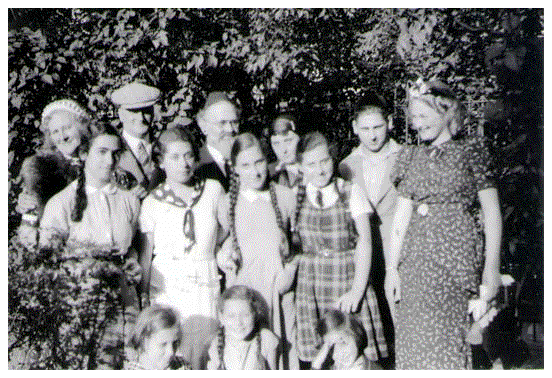
Rabbi & Lotte Carlebach with eight of their children in the garden of their home together with Leopold, Lily and Joan Hirshfield
In little over a year the historic Synagogue would be destroyed by the Nazis and Lotte Carlebach would be in the midst of a heroic and desperate struggle to find homes in Britain for the Jewish children of Hamburg. Many of the children who were “lucky enough” to find homes in Britain via the Kinder transports would never see their parents and loved ones again. I can recall my grandfather once telling me that Desmond had worked in Germany before the war, but unfortunately I have no idea why. Did my relatives play a part in assisting with those transports and if so, how could I find out what they did and how they did it?
Certainly there is evidence that Desmond did assist in the evacuation of Jewish teenagers and young adults and according to a book about his life “Labour’s Visionary – Lord Hirshfield” he spent much time during the second world war working at “Bloomsbury House” where the Jewish community had set up an emergency headquarters. The book states that Desmond was familiar with German and Germany and that Desmond was active on many levels. “Until December 1939 refugees were admitted on the understanding that their maintenance would be guaranteed by the Jewish Community, and Desmond importuned friends, relations, clients and even casual contacts to act as guarantors. He also busied himself in finding homes and, perhaps most difficult of all, jobs for the newcomers.” It goes on to say that “After negotiations with the National Union of Agricultural Workers and the Ministry of Labour, Desmond helped to work out a scheme which enabled over a thousand Jewish newcomers, all in their late teens or early twenties, to find jobs on the land.”
So it would seem that Desmond was involved with the “Movement for the Care of Children from Germany”. Further evidence of Desmond’s work has been provided by Prof. Gillis-Carlebach in her document “A Story Behind Three Letters” June 2003
 Back |
 Next |